
 Save to Pinterest
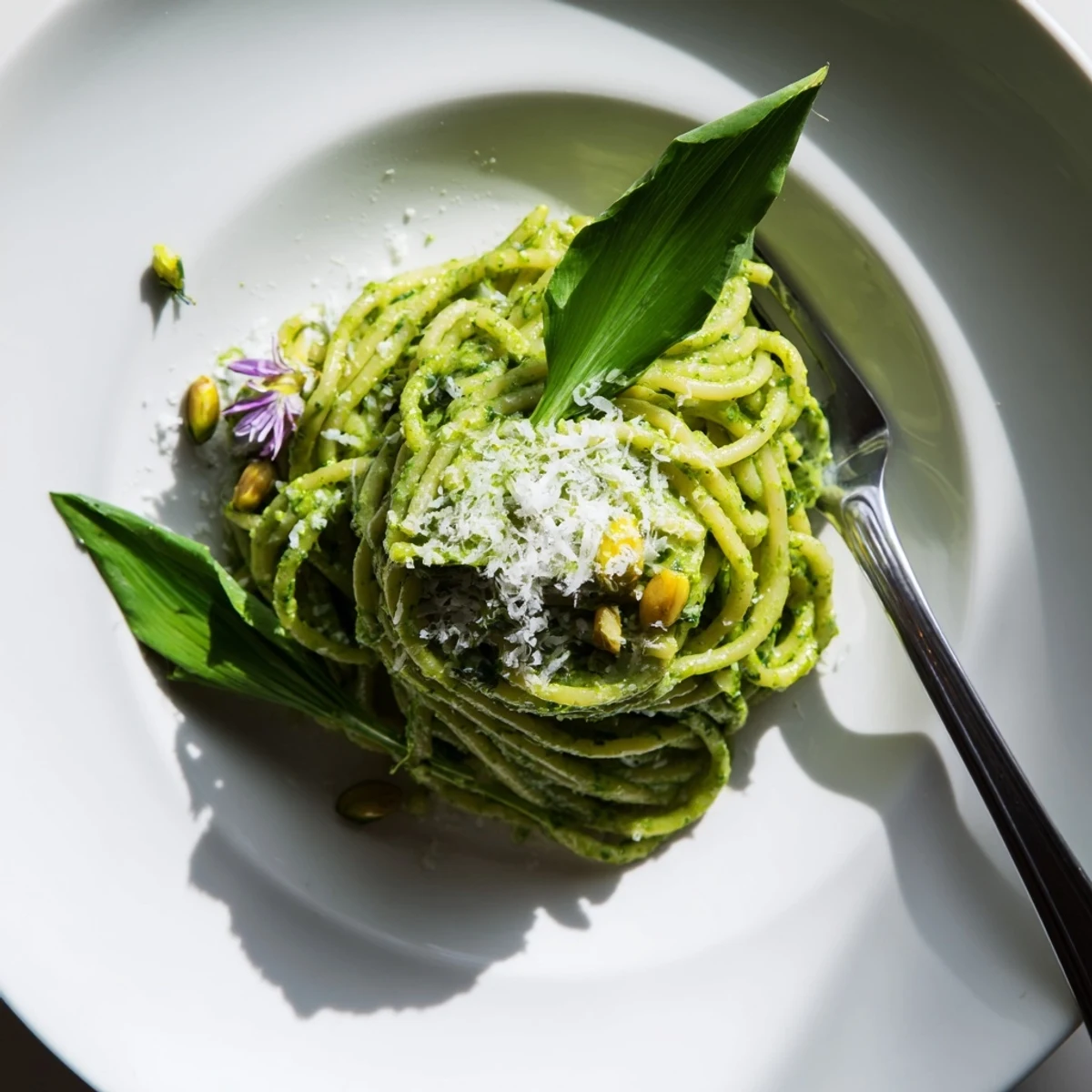
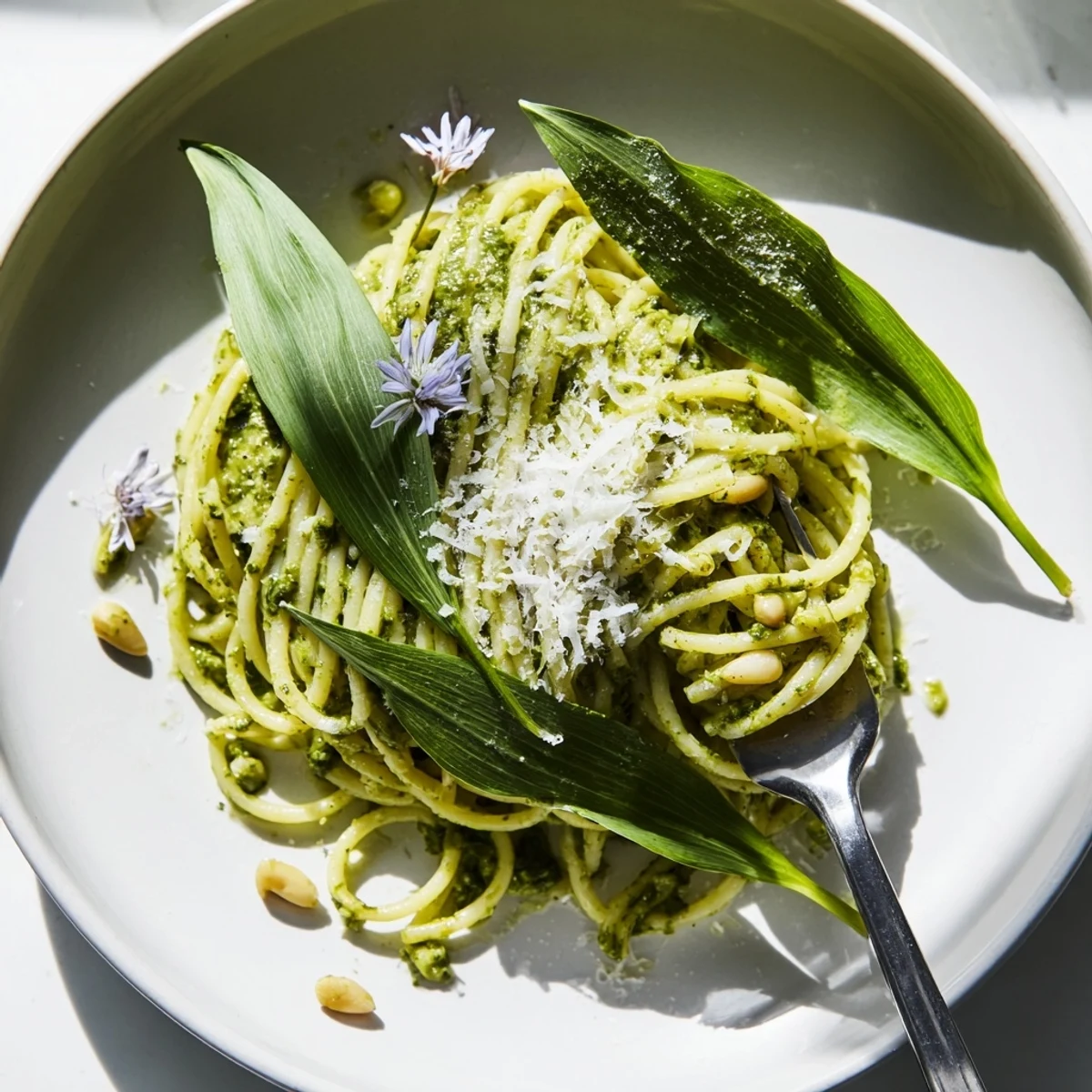
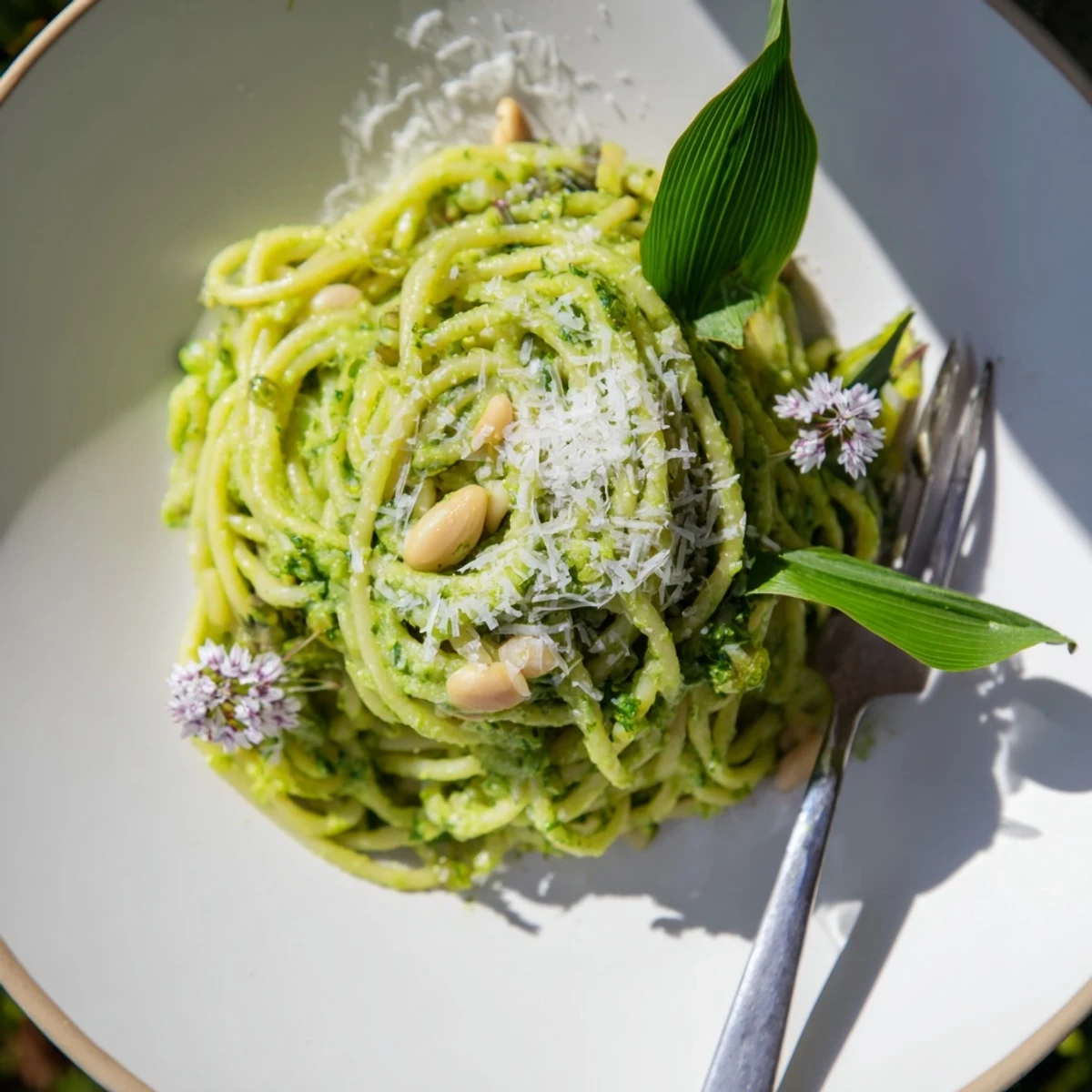
 This wild garlic pesto pasta brings together the fresh, aromatic flavors of foraged wild garlic with classic Italian pesto ingredients. Blitz wild garlic leaves with pine nuts, Parmesan, olive oil, and a squeeze of lemon into a vibrant green sauce, then toss it through perfectly cooked spaghetti or linguine.
Ready in just 25 minutes, it's an ideal weeknight dinner that celebrates the brief but glorious wild garlic season. The pasta cooking water creates a silky, restaurant-quality sauce that clings to every strand.
The smell hit me before I even saw the patch, a pungent green garlic cloud drifting across a damp forest trail in late April. My friend Lena, who seems to have a sixth sense for these things, dropped to her knees and started stuffing handfuls of broad, pointed leaves into her canvas tote. That evening we stood in her tiny kitchen, blitzing wild garlic into the most aggressively green pesto I had ever seen, and I have been chasing that moment every spring since.
I brought a jar of this pesto to a rooftop potluck one May evening and watched three strangers scrape the container clean with their fingers.
Ingredients
- Dried pasta (400 g, spaghetti or linguine): Long strands hold the silky pesto best, and I have learned that a slightly thicker noodle stands up to the bold sauce without disappearing.
- Salt (1 tbsp, for pasta water): The water should taste like mild seawater because this is your only chance to season the pasta from within.
- Wild garlic leaves (80 g, washed): These are the star, so pat them completely dry after washing or your pesto will turn watery and dull.
- Pine nuts or walnuts (30 g): Toasting them for two minutes in a dry pan is a small step that pays off enormously in warmth and depth.
- Parmesan cheese (50 g, grated): Grate it finely yourself rather than buying pre grated, which often contains anti caking agents that make the sauce grainy.
- Extra virgin olive oil (80 ml): Use the good stuff here, a fruity, peppery oil transforms the entire dish.
- Garlic clove (1 small, optional): Skip this if your wild garlic is very young and potent, which it usually is.
- Lemon juice (from half a lemon): Just a squeeze lifts everything and keeps the vivid green from oxidizing into army drab.
- Salt and black pepper: Taste the pesto before adding salt because Parmesan is already quite salty.
- Extra Parmesan and edible flowers (for garnish): Entirely optional but they make the plate look like spring exploded on it.
Instructions
- Get the water rolling:
- Bring a large pot of well salted water to a full boil and drop in the pasta, stirring once to prevent sticking. Cook until just al dente, which usually means shaving thirty seconds off the package directions, then scoop out half a cup of that starchy water before you drain.
- Blitz the pesto:
- Pile the wild garlic leaves, toasted nuts, Parmesan, olive oil, the optional garlic clove, and lemon juice into a food processor. Pulse and scrape, pulse and scrape, until you have a lush, almost creamy paste, then taste for salt and pepper.
- Marry pasta and sauce:
- Toss the hot drained pasta back into the pot and spoon the pesto over it, adding splashes of the reserved pasta water as you toss until every strand gleams with a thin, silky coating.
- Plate and finish:
- Divide among warm bowls and shower with extra Parmesan, a few reserved wild garlic leaves, or edible flowers if you have been feeling fancy.
 Save to Pinterest
 There is something about eating a plate of food that tastes exactly like the season outside your window that makes a random Tuesday dinner feel like a celebration.
Serving Suggestions
A glass of cold Pinot Grigio and a simple arugula salad alongside this pasta is really all you need for a meal that feels put together without any effort at all.
Storage and Make Ahead
The pesto keeps in a jar in the fridge for up to five days if you pour a thin layer of olive oil on top to seal out oxygen.
Swaps and Variations
This recipe bends easily to whatever you have on hand or whatever dietary needs arise at your table.
- Replace Parmesan with nutritional yeast for a fully vegan version that still tastes rich and savory.
- Swap pine nuts for sunflower seeds or almonds if nut allergies are a concern.
- If wild garlic season has passed, use regular basil and add a minced garlic clove to approximate the flavor.
 Save to Pinterest
 Every spring I mark the calendar not by a date but by the first whiff of wild garlic on a damp walk, and then I know dinner that week is already decided.
Recipe FAQs
- → Where can I find wild garlic?
-
Wild garlic (also called ramsons) grows abundantly in woodland areas during spring, typically from March to May. You can forage it yourself in damp, shady spots, or find it at farmers' markets and specialty greengrocers during its short season.
- → Can I make the pesto ahead of time?
-
Yes, the pesto can be prepared up to 3 days in advance and stored in an airtight container in the fridge. Press a layer of olive oil on top to prevent oxidization and keep that bright green color. It also freezes well for up to 3 months.
- → What can I substitute for pine nuts?
-
Walnuts are the most common alternative and work beautifully with wild garlic. Almonds, cashews, or sunflower seeds are also excellent options. Toast whichever you choose lightly in a dry pan for deeper flavor.
- → How do I keep the pesto from turning brown?
-
The lemon juice in the pesto helps preserve the bright green color through its acidity. Blanching the wild garlic leaves for 10 seconds in boiling water, then shocking in ice water, also helps lock in that vivid color.
- → Is this dish suitable for vegans?
-
Absolutely. Simply swap the Parmesan for nutritional yeast, which provides a similar savory, cheesy depth. Use the same quantity and adjust to taste. A tablespoon of white miso paste blended in also adds wonderful umami.
- → What pasta shape works best?
-
Long strands like spaghetti, linguine, or tagliatelle are ideal as the pesto coats them evenly. Short shapes like fusilli or orecchiette also work well—the pesto settles into their crevices for great flavor in every bite.