
 Save to Pinterest
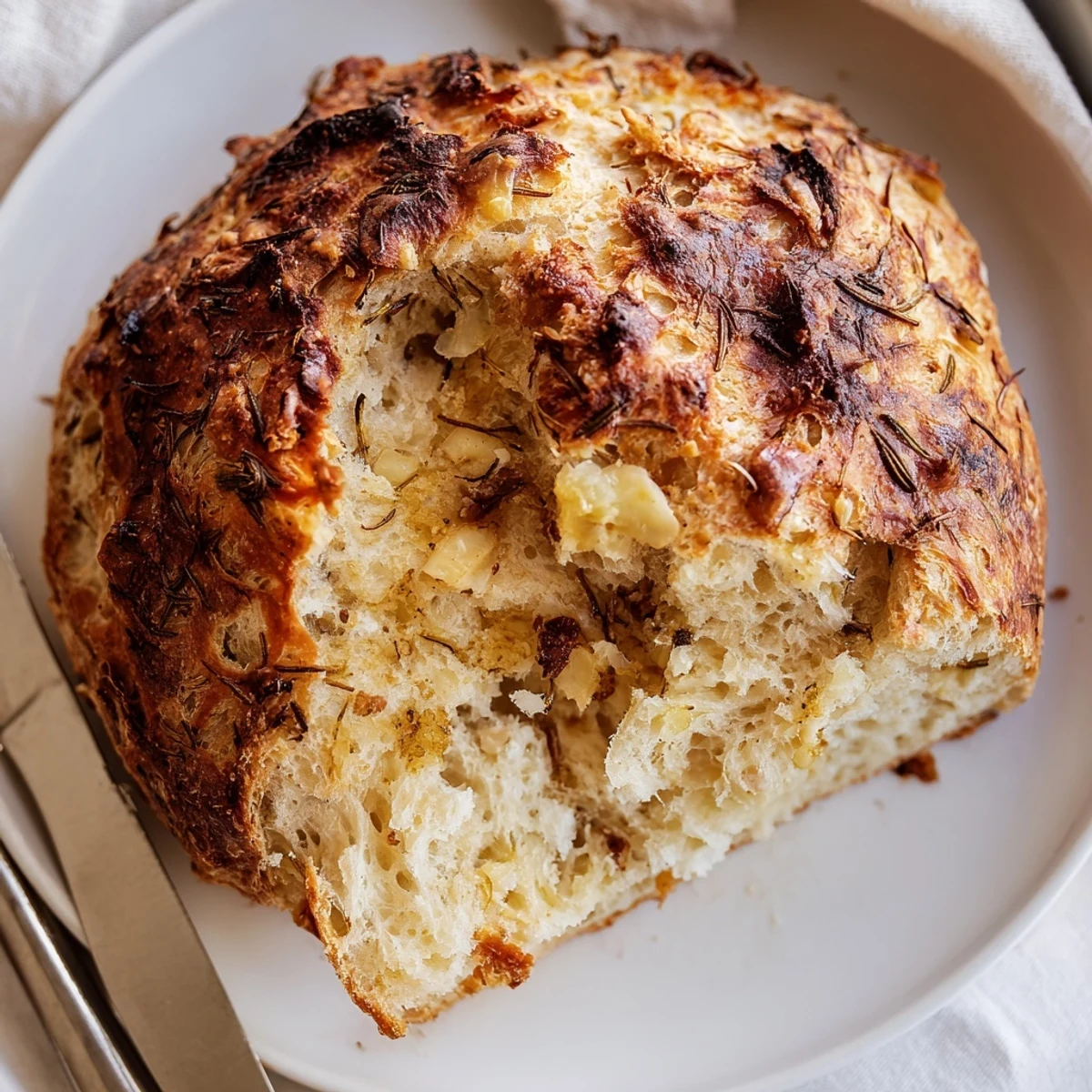
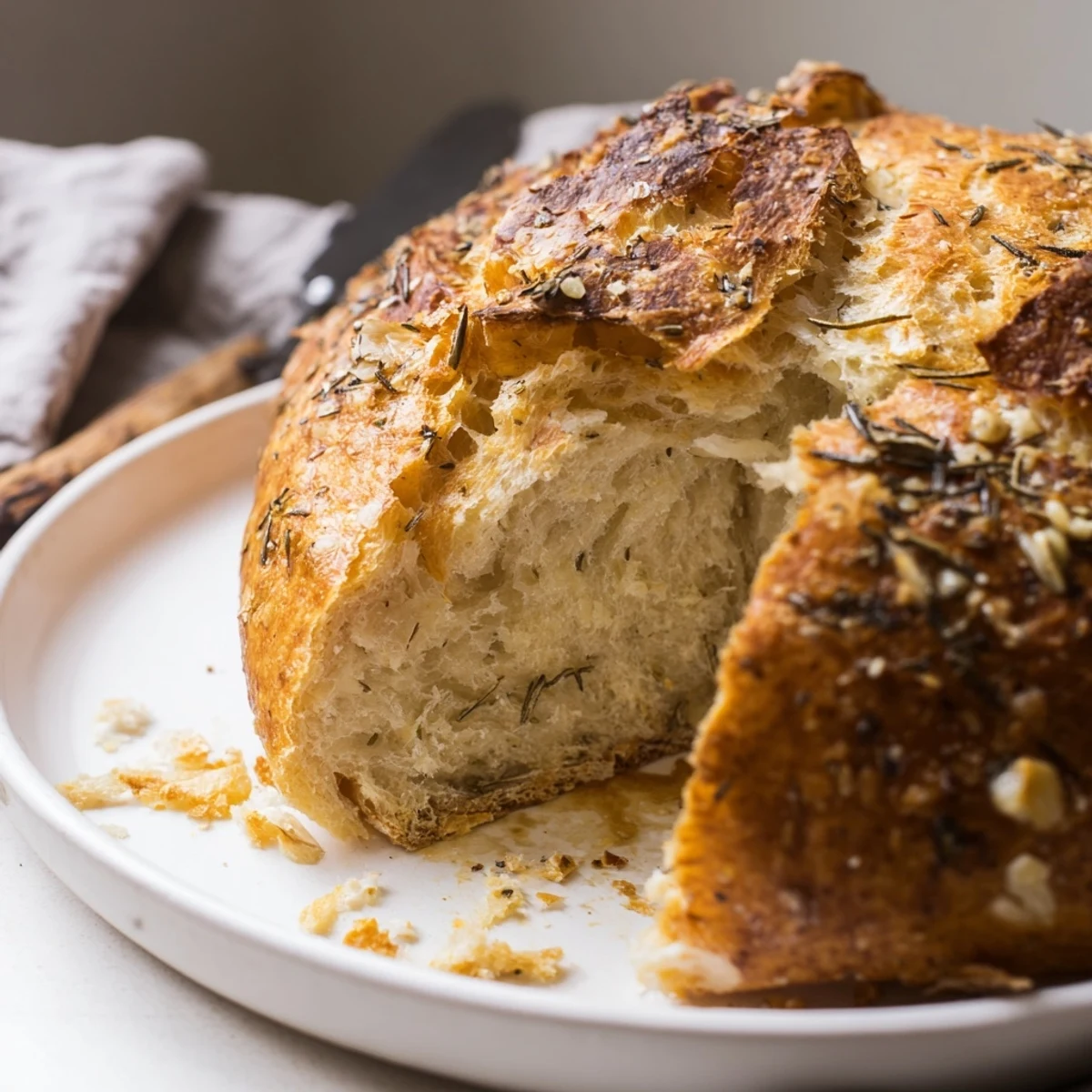
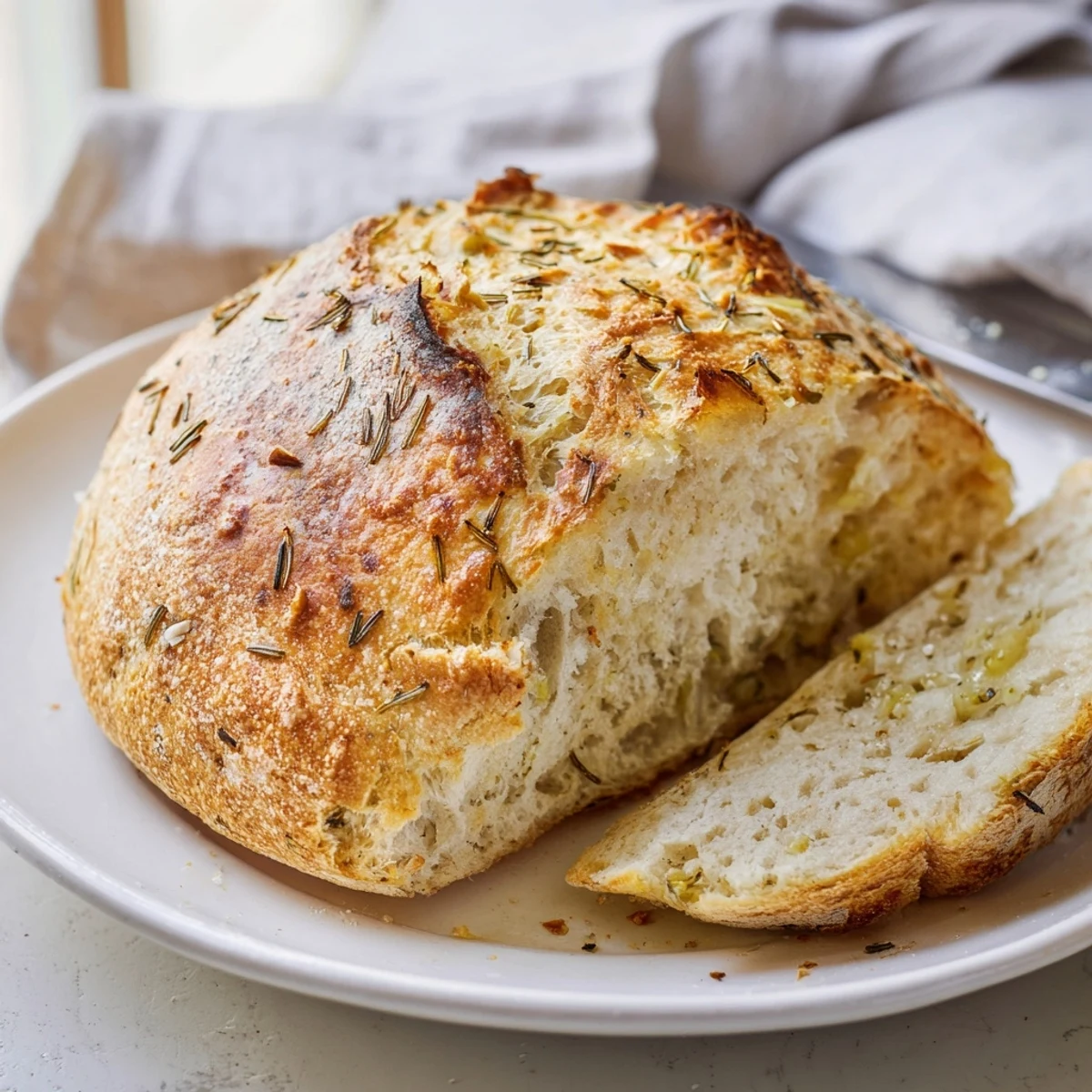
 This artisan-style bread combines fresh garlic and fragrant rosemary in a no-knead dough that bakes to perfection in a Dutch oven. The high-heat cooking method creates a crackling golden crust while keeping the inside tender and airy. After rising for several hours, the dough develops deep flavors before hitting the oven at 450°F. The result is a showstopping loaf with restaurant-quality appearance and taste, ideal for serving alongside pasta, soups, or enjoying warm with butter.
The whole house smelled like garlic and roses when I first attempted this bread on a gray Sunday afternoon. My neighbor actually knocked on the door to ask what I was baking, which I took as the highest compliment imaginable.
I served this bread at a small dinner party that same evening, still warm from the oven, and watched three people reach for seconds before the main course even hit the table. Something about tearing into that steaming crust makes people forget their manners in the best possible way.
Ingredients
- Bread flour: Higher protein content than all purpose gives this bread structure and chew
- Fine sea salt: Coarser salt can leave salty spots in your dough
- Active dry yeast: Check the expiration date because old yeast leads to dense disappointing bread
- Lukewarm water: Think bath temperature, about 100°F, anything hotter kills the yeast
- Olive oil: Adds subtle richness and helps keep the crumb tender
- Fresh garlic: Minced finely so it disperses evenly throughout every bite
- Fresh rosemary: Dried herbs work but fresh gives that aromatic punch people notice immediately
Instructions
- Mix the dry base:
- Whisk flour, salt, and yeast in a large bowl until combined, about 30 seconds
- Combine liquids and aromatics:
- Pour in the water and olive oil, stirring until a shaggy sticky dough forms, then fold in the garlic and rosemary
- Let it rise:
- Cover the bowl and walk away for 2 to 3 hours until the dough has doubled and looks puffy with bubbles
- Shape the loaf:
- Turn the dough onto a floured surface, fold the edges toward the center to form a ball, then place seam side down on parchment paper
- Preheat your Dutch oven:
- Put the pot and lid in a cold oven, then crank it to 450°F while the dough rests for another 30 to 45 minutes
- Bake covered:
- Carefully lift the parchment and dough into the screaming hot Dutch oven, cover with the lid, and bake for 30 minutes
- Finish uncovered:
- Remove the lid and continue baking 12 to 15 minutes until the crust turns deep golden brown and sounds hollow when tapped
- Cool completely:
- Let the bread rest on a wire rack for at least 20 minutes because cutting into hot bread ruins the texture
 Save to Pinterest
 This recipe became my go to for housewarming gifts after a friend told me she ate the entire loaf standing at her kitchen counter the morning I brought it over. Apparently, the aroma had beckoned her out of bed before her coffee even brewed.
Getting The Rise Right
Temperature affects your dough dramatically. In winter, I sometimes turn my oven light on and let the dough rise inside the warmth, while summer kitchens might speed the process up significantly.
Customizing The Flavor
Kalamata olives or sun dried tomatoes can be folded in with the garlic and rosemary. I once added grated Parmesan to the dough and nobody could stop eating it.
Storage And Serving
This bread peaks the same day but makes incredible toast the next morning. I keep leftovers wrapped in a cloth bag, never plastic, which turns the crust soggy.
- Wrap cooled bread in a clean kitchen towel for overnight storage
- Revive day old crust by sprinkling with water and reheating at 350°F for 10 minutes
- Slice with a serrated knife using a gentle sawing motion to preserve the crumb
 Save to Pinterest
 There is something profoundly satisfying about pulling a steaming loaf from your own oven, the crust crackling as it cools, knowing you made something this good with your own hands.
Recipe FAQs
- → Why use a Dutch oven for bread?
-
A Dutch oven creates a steamy environment that mimics professional deck ovens, trapping moisture to develop a thick, crispy crust while keeping the interior soft and chewy.
- → Can I make this without a Dutch oven?
-
Yes, bake on a preheated baking stone or sheet pan at 450°F. Create steam by placing a pan of hot water on the bottom rack, though the crust may be slightly less crispy.
- → How do I know when the bread is done?
-
The crust should be deep golden brown, and the bread should sound hollow when tapped on the bottom. An instant thermometer inserted into the center should read 200-205°F.
- → Can I use dried rosemary instead of fresh?
-
Yes, use 1 tablespoon of dried rosemary. Add it with the dry ingredients since dried herbs don't need the gentle handling that fresh ones require.
- → How should I store leftovers?
-
Wrap in a clean kitchen towel or paper bag at room temperature for up to 2 days. For longer storage, slice and freeze in a sealed bag, then toast to refresh.
- → Why does the dough need to rise so long?
-
The extended rise allows fermentation to develop complex flavors and create the airy interior structure. This slow process is key to achieving authentic artisan bread taste and texture.